India-US trade deal ends year-long tariff dispute
India and US end tariff standoff with landmark trade agreement
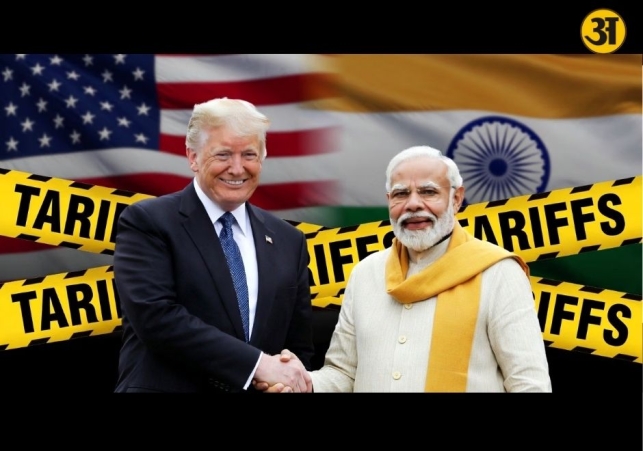
India and the United States have finally sealed a major trade agreement, ending a long and tense tariff dispute that lasted for nearly a year. The deal was announced on Monday after a phone conversation between Prime Minister Narendra Modi and US President Donald Trump. As part of the agreement, the United States has reduced reciprocal tariffs on Indian exports from 25 per cent to 18 per cent, offering significant relief to Indian businesses and exporters.
The agreement is being seen as a major reset in India-US trade relations. For months, both countries were locked in tough negotiations marked by high tariffs, strong political statements, and diplomatic pressure. The final breakthrough came after sustained dialogue and behind-the-scenes diplomacy, showing that both sides were willing to compromise to protect long-term economic ties.
The reduced tariffs are expected to boost Indian exports to the US and improve overall trade sentiment. Prime Minister Modi welcomed the decision and said he was happy that “Made in India” products would now face lower duties in the American market. President Trump also described the agreement as an important step forward for bilateral trade.
A year of tough negotiations
The road to the trade deal was long and often difficult. Talks began with optimism in early 2025, but progress slowed due to disagreements over tariffs, agriculture, data rules, and energy imports. Despite repeated meetings, both sides struggled to bridge key differences.
In February 2025, Prime Minister Modi visited Washington, where both countries agreed on a broad vision to expand bilateral trade to 500 billion dollars by 2030. India also expressed interest in increasing energy purchases from the US. This visit laid the foundation for future talks, but it did not result in an immediate agreement.
In March and April 2025, bilateral discussions gained momentum. Indian Commerce Minister Piyush Goyal met US officials in Washington, while American trade representatives visited New Delhi. During this period, both sides finalised terms of reference, raising hopes that a deal could be signed soon.
However, by June 2025, negotiations began to slow down. Differences emerged over import duties on agricultural products. Although President Trump publicly said that a “big” deal was coming, reports suggested that talks had hit a roadblock. Around the same time, Prime Minister Modi declined an invitation to visit Washington, signalling growing discomfort.
The situation worsened in July and August 2025. Indian negotiators returned home without progress, and the government made it clear that national interest would not be compromised. In response, the US imposed a 25 per cent tariff on Indian imports, followed by an additional penalty over India’s continued purchase of Russian oil. This pushed total duties to as high as 50 per cent, sharply escalating tensions.
ALSO READ: Shehbaz Sharif says Pakistan feels ashamed seeking loans abroad
Diplomacy brings breakthrough
After months of strain, the tone began to soften in September 2025. President Trump indicated that he would soon speak with Prime Minister Modi, while the Indian Prime Minister described the US as a close and natural partner. Although public disagreements continued, quiet diplomacy resumed behind closed doors.
In October 2025, controversy arose after President Trump claimed that Prime Minister Modi had promised to stop buying Russian oil. India quickly rejected this statement, stressing that its energy decisions are guided only by national interest. Despite this public disagreement, talks continued privately.
November 2025 saw little public movement, but negotiations quietly progressed. In December, Prime Minister Modi confirmed that he had a warm and detailed phone call with President Trump. He said the two leaders discussed global issues and trade matters, indicating that real progress was being made.
By January 2026, US officials confirmed that negotiations were advancing steadily. Both sides signalled that they were close to an agreement. Finally, in February 2026, President Trump announced that the two countries had agreed to a trade deal, immediately cutting tariffs to 18 per cent.
The agreement brings much-needed relief to Indian exporters who were struggling under high duties. It also sends a strong message about the importance of dialogue and cooperation, even during periods of tension.
While details of the full agreement are yet to be shared, the deal is expected to improve trade flows and strengthen economic ties between India and the US. For both countries, the agreement marks the end of a difficult chapter and the beginning of a more stable and cooperative trade relationship.
Related News